

Table of Contents
- What Makes Streetwear Fabrics Durable
- Natural vs. Synthetic Fibers in Streetwear
- Heavyweight Cotton GSM for Streetwear: Understanding Weight Standards
- Durability of Ring-Spun vs. Open-End Cotton in Graphic Tees
- Weave Types and Fabric Construction for Longevity
- How to Care for Graphic Streetwear to Maximize Lifespan
- Synthetic Blends and Performance Materials
- Conclusion
- Frequently Asked Questions
Last Updated: September 4, 2026
What Makes Streetwear Fabrics Durable
Durability in streetwear comes down to four measurable properties: fiber composition, fabric weight, weave structure, and seam construction. A graphic tee that survives two years of weekly wear starts with the right raw materials, not just a thick print. When you search for the best streetwear fabrics for long term durability, you are really asking which combinations of these properties resist the specific failures that kill garments: pilling, shrinkage, color fading, and tearing at stress points.
The most common failure point is not the fabric itself but the interaction between the graphic and the textile. Heavy prints on flimsy bases crack and peel because the substrate stretches while the ink does not. At Dr. Stymie's Maker Products, LLC., we prioritize garment construction that supports bold graphics without compromising the fabric's structural integrity, which is why our Campology 101 tee uses 100% U.S. cotton at 30 singles for a denser, smoother printing surface.

Durable streetwear fabric is any textile that maintains its shape, color, and structural integrity through repeated washing and wear. This guide breaks down the science of textile integrity so you can identify quality pieces before you buy.
Natural vs. Synthetic Fibers in Streetwear
The choice between natural and synthetic fibers depends on which failure mode you'll tolerate and how you want your garment to age. Streetwear culture values the "lived-in" aesthetic: fading, softening, and patina development extend perceived lifespan even as technical properties shift.
Natural Fibers: Cotton and Linen
Cotton absorbs moisture readily, making it breathable but prone to degradation under mechanical stress. As cotton absorbs water during washing, fibers swell and become brittle, eventually snapping and causing pilling and holes. However, this degradation brings desirable softening, a 100% cotton tee becomes softer after 20 washes while developing patina and character.
Linen is stronger than cotton but wrinkles easily and is less common in streetwear. Cotton remains the natural fiber of choice because it balances durability, comfort, and aesthetic aging.
Synthetic Fibers: Polyester and Nylon
Polyester and nylon resist moisture and mechanical breakdown far better than cotton. Polyester maintains structural integrity through repeated washing but pills more readily and resists fading. Nylon is more abrasion-resistant but yellows under UV exposure and becomes brittle over time.
A polyester garment lasting ten years sheds 5,000 to 141,500 microfibers per wash, accumulating in waterways without biodegrading. A cotton garment wearing out in five years biodegrades completely within months, making synthetic durability a hidden environmental cost.
Blended Fabrics: The Practical Middle Ground
Most quality streetwear uses blends to capture benefits of both fiber types. A 50/50 cotton-polyester blend balances breathability and aging with tear resistance and dimensional stability. Polyester prevents stretching at high-stress areas because its fibers have lower elasticity than cotton.
Fiber choice determines how a garment fails and ages. For streetwear, natural fibers with visible aging often outperform synthetics in perceived value despite shorter technical lifespan. Choose synthetics for maximum durability or natural fibers for desirable patina.
Heavyweight Cotton GSM for Streetwear: Understanding Weight Standards
Fabric weight (GSM) is the most reliable predictor of cotton garment longevity. Standard tees are 130-150 GSM; heavyweight streetwear starts at 180 GSM and extends to 240+ GSM for premium pieces.
The Campology 101 tee at 150 GSM, combined with 100% U.S. cotton and 30-singles yarn, produces fabric dense enough to hold saturated graphics without cracking.
GSM interacts with fiber quality: 200 GSM short-staple cotton pills faster than 170 GSM long-staple cotton. Look for garments specifying both GSM and yarn count.
Durability of Ring-Spun vs. Open-End Cotton in Graphic Tees
Ring-spun cotton, twisted from long-staple fibers, creates smoother, stronger yarn than open-end cotton's air-spun shorter fibers. After ten washes, ring-spun fabric softens without breaking down while open-end fabric develops fuzz and loses print adhesion.
The 30-singles specification indicates ring-spun yarn, which matters more than GSM alone. Smoother yarn surfaces accept ink evenly, reducing cracking and peeling.
Two 180 GSM tees may differ significantly: ring-spun long-staple cotton outlasts open-end fibers by a substantial margin under identical care.
Weave Types and Fabric Construction for Longevity
Weave structure determines stress handling, but construction techniques at stress points are equally critical. Premium streetwear combines durable weave with reinforced details at seams, hems, and closures.
Understanding Weave Structures
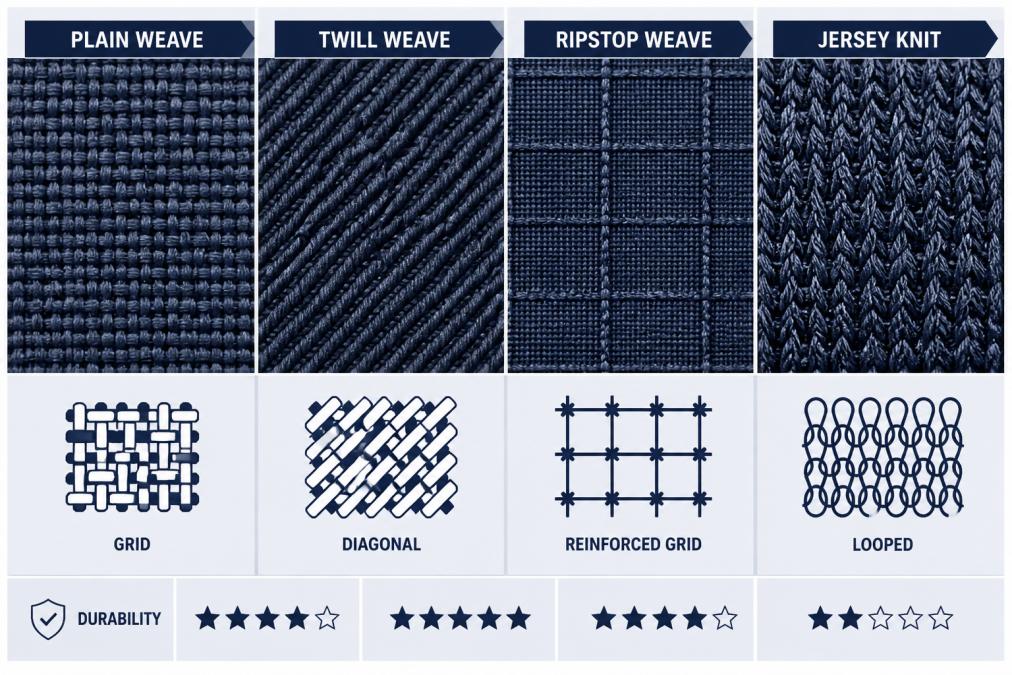
Plain weave interlocks threads in an over-under pattern, ideal for printing but distributes stress unevenly. A small tear can cascade quickly as load transfers suddenly to adjacent threads.
Twill weave uses a diagonal pattern where each thread passes over multiple threads, distributing stress across a wider area. This is why denim and workwear use twill, it resists tearing and abrasion better than plain weave of the same weight and fiber content.
Ripstop weave uses thicker threads at regular intervals to prevent tears from spreading. It provides tear resistance without significant weight, making it common in technical apparel and outerwear.
Jersey knit, used in most t-shirts, is made from interlocking loops rather than woven threads. A snag can cause loops to ladder and unravel, making graphic tees vulnerable despite heavyweight fabric.
Stress-Point Reinforcement: The Hidden Durability Factor
Construction techniques at stress points determine whether a garment survives repeated wear. Armholes, shoulder seams, crotch seams, hem edges, and zipper attachments experience concentrated stress from body movement.
Bar-tacking makes multiple passes at stress points, distributing force across multiple stitches. A bar-tacked zipper survives 500+ cycles versus 50-100 without it, potentially doubling or tripling jacket lifespan.
Double-stitching runs two parallel seam lines, distributing load across wider fabric area. A single-stitched 200 GSM seam fails before a double-stitched 150 GSM seam under identical stress.
Seam tape seals seams, prevents fraying, and distributes stress across tape and fabric. Quality hoodies and jackets use seam tape at shoulder seams and armholes.
Spandex fibers stretch 500% and return to original length. A ribbed cuff without spandex stretches permanently after 20-30 washes; with 5-10% spandex, it maintains shape for 100+ washes.
The Interaction Between Weave and Construction
Premium streetwear combines durable weave with stress-point protection. A hoodie with twill body, double-stitched seams, bar-tacked zipper, and spandex cuffs outlasts one with single-stitched seams and non-spandex cuffs by 2-3 times under heavy use.
When evaluating streetwear for durability, examine both the fabric specification and the visible construction details. Look for double-stitched seams, reinforced stress points, and ribbed details that include spandex. These details are often visible on the inside of a garment or at seam lines. A garment that invests in these construction techniques is signaling that durability was a design priority, not an afterthought.
How to Care for Graphic Streetwear to Maximize Lifespan
Turn graphic tees inside out before washing to protect prints from abrasion. Use cold water to prevent shrinkage and fading, and avoid fabric softeners that break down synthetics.
Air drying extends garment life most effectively. Machine dryers accelerate fiber breakdown and crack prints. If using a dryer, select low heat and remove garments while damp to preserve loft and prevent pilling.
Fold heavyweight cotton garments rather than hanging them, as hangers stretch shoulder seams. Proper washing, drying, and storage can double usable life.
Synthetic Blends and Performance Materials
Synthetic blends add performance properties: polyester provides tear resistance and moisture-wicking, nylon offers abrasion resistance. The trade-off is reduced breathability compared to natural fibers.
Polyester garments shed microplastics and don't biodegrade, creating persistent waste despite durability. Natural fibers wear out faster but return to the environment without permanent residue, a key sustainability consideration.
The 50/50 cotton-polyester blend balances durability and sustainability. The Grillology 101 Hoodie from Dr. Stymie's Maker Products, LLC. uses pill-resistant air jet yarn with spandex in cuffs and waistband to resist stretching.

Textile Exchange's materials sustainability report continues to document the growing market share of recycled synthetics, though recycled polyester still faces challenges in maintaining the same strength as virgin fibers.
Conclusion
Choose streetwear by examining material specifications: prioritize heavyweight ring-spun cotton for tees, twill or ripstop for jackets and pants, and cotton-poly blends for hoodies. Care for garments with cold water and air drying.
Dr. Stymie's Maker Products, LLC. applies these same standards across its apparel collections, from the 100% U.S. cotton Campology 101 tee at $16.99 to the pill-resistant Grillology 101 Hoodie at $29.99. Each piece is designed to hold up through repeated wear and washing while carrying bold, retro-inspired graphics that stay sharp. FTC's guide on textile labeling and care instructions offers additional guidance on what those fabric content labels actually tell you.
Cotton Incorporated's research on fabric durability testing confirms that consumers consistently rank durability as a top factor in apparel satisfaction, yet most shoppers have no way to verify quality before purchase. Knowing your GSM, yarn count, and weave construction closes that gap.
Frequently Asked Questions
What fabric material lasts the longest for streetwear?
Heavyweight cotton (10-14 oz. per square yard) and cotton-polyester blends offer significant lifespan for streetwear. Ring-spun cotton provides superior abrasion resistance compared to open-end cotton due to tighter fiber structure. Synthetic blends add tear resistance and reduce shrinkage. The best choice depends on your wear pattern: pure heavyweight cotton for classic durability, blends for performance and low-maintenance care.
Does 100% cotton last longer than polyester blends?
Not necessarily. While 100% cotton offers breathability and comfort, polyester blends can improve durability. A 50/50 cotton-polyester blend can reduce pilling, shrinkage, and color fading while maintaining breathability. Polyester's synthetic fibers add tear resistance and abrasion strength. For streetwear graphic tees, a quality blend often provides good durability when subjected to regular wear and washing.
How do I identify high-quality, durable streetwear fabrics?
Look for GSM (grams per square meter) of 180-210 for optimal weight. Check fiber composition on the care tag: ring-spun cotton indicates better quality than open-end. Examine seam construction and stitching density. Quality brands use reinforced stress points at shoulders and armholes. Colorfastness (resistance to fading) matters for graphic designs. Test fabric feel: denser, smoother fabrics resist pilling better. Heavier weight doesn't always mean better durability, construction and fiber type matter equally.
What's the difference between ring-spun and open-end cotton?
Ring-spun cotton undergoes a slower, more precise spinning process that creates tighter, stronger fiber bundles with fewer loose fibers. This reduces pilling and increases abrasion resistance, making it ideal for streetwear that experiences friction. Open-end cotton spins faster and costs less, but has more protruding fibers that pill more easily. For graphic streetwear destined for long-term wear, ring-spun cotton delivers good durability and a softer hand-feel over time.
Building a durable streetwear wardrobe starts with understanding fabric specifications, not just aesthetics. Dr. Stymie's Maker Products, LLC. combines 1990s-inspired graphic design with heavyweight cotton and pill-resistant fleece so your favorite pieces survive the rotation. Explore the Campology 101 tee and Grillology 101 Hoodie to see the difference that proper fabric selection makes. Continue shopping with Dr. Stymie's Maker Products, LLC. and build a collection built to last.
This article was written using GrandRanker