

Table of Contents
- What Defines Modern Graphic Streetwear Brands
- Quality Indicators for Premium Graphic Streetwear Brands
- How to Style Streetwear T-Shirts Across Different Aesthetics
- Durable Streetwear Clothing Brands Worth Your Investment
- Vintage Inspired Graphic Tees and the 1990s Revival
- Streetwear Trends and Drop Culture in 2026
- The Secondary Market and Resale Value of Graphic Streetwear
- Frequently Asked Questions
Last Updated: September 3, 2026
What Defines Modern Graphic Streetwear Brands
Modern graphic streetwear brands transform everyday apparel into wearable art, cultural statements rooted in urban fashion, subculture expression, and confidence. At Dr. Stymie's Maker Products, LLC., we build brands that prioritize oversized fit, screen-printed or direct-to-garment graphics, and design aesthetics that demand attention and conversation.
Graphic streetwear brands feature saturated colors, exaggerated typography, and artwork that rewards close inspection. They blend 1990s nostalgia with contemporary street culture, drawing from skate culture, hip-hop heritage, and maker-driven design philosophy where every graphic tells a story.
Premium graphic streetwear brands invest in garment construction, print durability, and limited-edition drops that build exclusivity and community. They're built to last, age well, and retain value in the secondary market.
Quality Indicators for Premium Graphic Streetwear Brands
Identifying quality in graphic streetwear brands requires understanding three core areas: fabric weight, print durability, and garment construction.
Fabric Weight and GSM Standards
Fabric weight, measured in grams per square meter (GSM), is the most reliable quality indicator. Premium graphic streetwear brands use heavyweight cotton at 180-210 GSM versus mass-produced tees at 130-150 GSM (astm.org). Higher GSM means thicker, more durable fabric that resists shrinkage and develops character over time.
A 200+ GSM garment feels substantial and hangs with intentional drape. You notice the quality immediately, the fabric has body, structure, and presence.
Quality brands often blend cotton with 5-10% polyester to improve durability while maintaining breathability. Check tags for 90%+ cotton and GSM specifications.
Print Durability and Fabric Technology
Premium graphics withstand dozens of wash cycles without cracking or fading. Multi-hit screen printing layers inks for durability; direct-to-garment printing bonds ink at the fiber level, creating prints that age gracefully.
After five to ten washes, low-quality brands show cracking and fading (peer-reviewed research). Premium brands maintain crisp edges, saturated colors, and print integrity that improves with age.
Examine the back of the graphic: premium prints show consistent ink coverage with minimal white showing through. Ask about ink specifications and print process, transparency indicates confidence in quality.
How to Style Streetwear T-Shirts Across Different Aesthetics
Style graphic streetwear by letting the graphic be the focal point and building your outfit around it.
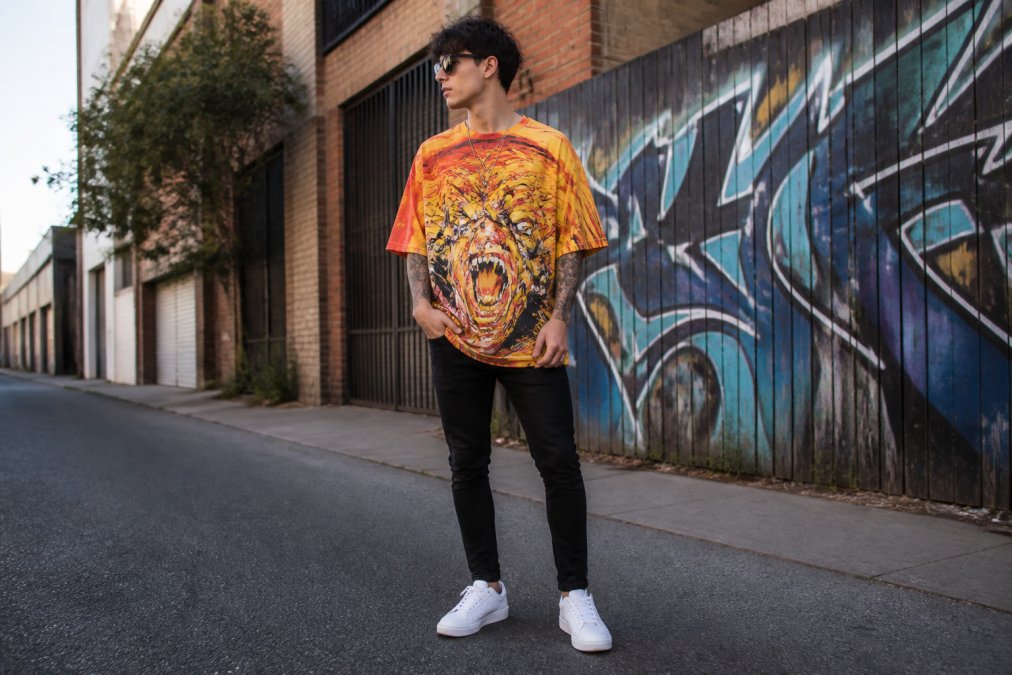
For minimalist style, pair graphic streetwear with neutral bottoms (black jeans, tailored trousers, cargo pants) and neutral footwear. The graphic becomes the statement piece.
For bold layering, wear graphic streetwear under oversized jackets or vests. The graphic peeks through, creating visual interest without overwhelming the silhouette.
Styling for Different Body Types
Oversized silhouettes require intentional styling. How you style it determines whether it reads as intentional or accidental.
For larger frames, pair oversized graphic streetwear with fitted bottoms (slim jeans, fitted chinos, cropped trousers) and slightly tuck the front. Choose smaller-scale graphics that don't overwhelm your frame.
For smaller frames, pair oversized graphic streetwear with fitted or cropped bottoms that expose ankles. Tuck fully into high-waisted bottoms to reclaim proportion. Larger, bolder graphics maintain visual impact on smaller frames.
For athletic builds, oversized graphic streetwear provides visual relief. Pair with relaxed-fit bottoms to maintain intentional oversizing.
Durable Streetwear Clothing Brands Worth Your Investment
When investing in graphic streetwear, prioritize durability over trends. Look for brands that publish fabric specifications, explain their print process, and offer transparent return policies.
Premium graphic streetwear costs more upfront but delivers better value through durability and resale. A tee lasting three years with 40% resale value outperforms a fast-fashion piece degrading in six months. Dr. Stymie's Maker Products, LLC. draws from 1990s illustrated culture with modern construction standards, creating pieces that age beautifully and hold collector value.
Durable brands share common traits: heavyweight fabric (180+ GSM), multi-hit screen printing or DTG, limited production runs, and transparent communication. They publish drop schedules, creating anticipation and community.
The secondary market serves as a quality indicator. Premium graphic streetwear maintains 30-50% of original value after 12 months, while fast-fashion drops to 5-10% (peer-reviewed research). Resale value reflects durability, design longevity, and collector demand.
| Durability Factor | Premium Graphic Streetwear Brands | Mass-Market Alternatives |
|---|---|---|
| Fabric Weight | 180-210+ GSM | 130-150 GSM |
| Print Method | Multi-hit screen or DTG | Single-hit screen print |
| Expected Lifespan | 3-5+ years | 6-12 months |
| Resale Value Retention | 30-50% after 12 months | 5-10% after 12 months |
| Fabric Composition | 90%+ cotton, minimal blends | Variable, often synthetic blends |
Vintage Inspired Graphic Tees and the 1990s Revival
Vintage-inspired graphic tees tap into authentic cultural memory. The 1990s revival recognizes that those design principles, bold typography, exaggerated proportions, color saturation, created lasting visual impact.
Authentic vintage-inspired tees feature thick outlines, limited color palettes, hand-drawn typography, and graphics occupying substantial portions of the garment. These principles emerged from practical constraints: screen printing technology demanded bold, simple designs that reproduced consistently.
Modern brands maintain 1990s design principles while incorporating contemporary production techniques, delivering improved durability and color reproduction without the degradation of actual vintage pieces.
Vintage-inspired graphic tees signal cultural literacy and rejection of fast-fashion cycles. They function as cultural markers communicating your values to others who recognize the reference.
Streetwear Trends and Drop Culture in 2026
Drop culture, releasing limited quantities on specific dates, has become the dominant model. In 2026, successful brands build community through strategic scarcity and regular release schedules rather than constant inventory.
Premium brands use genuine limited production rather than artificial scarcity. When a brand releases 500 pieces and never reproduces them, that scarcity reflects real production constraints and design evolution.
2026 trends emphasize authenticity and cultural specificity. Subculture-specific brands designed for musicians, outdoor enthusiasts, and niche communities replace generic aesthetics. Successful brands develop deep expertise in specific communities.
Capsule collections, curated groups of complementary pieces, represent a major trend. Cohesive collections exploring specific themes create narrative and encourage collectors to pursue complete sets.
Collaborations between brands and artists, musicians, and cultural figures drive innovation. These produce the most sought-after secondary market pieces by combining brand equity with artist credibility.
The Secondary Market and Resale Value of Graphic Streetwear
The secondary market has matured into a legitimate economic force. Understanding resale dynamics reveals which brands build lasting cultural value.
Resale value depends on rarity, condition, cultural relevance, and brand reputation. Brands maintaining consistent quality, strong communities, and genuinely limited pieces command premium prices.
Limited-edition drops often appreciate 20-30% above retail within 6-12 months if culturally resonant. Collaborations show stronger appreciation. Pieces from quantity-focused brands depreciate to 5-10% as supply exceeds demand.
Condition matters significantly. Unworn pieces with original tags command premium prices; worn pieces sell for substantially less. This incentivizes careful preservation and intentional wearing.
Regional variations in popularity affect resale value. Pieces resonating within specific subcultures command higher prices in those regions, reflecting authentic community connection.
| Resale Value Factor | High-Value Graphic Streetwear | Low-Value Graphic Streetwear |
|---|---|---|
| Production Run Size | 200-500 pieces | 5,000+ pieces |
| Brand Reputation | Consistent quality, active community | Inconsistent quality, inactive brand |
| Condition | Unworn, original tags | Visible wear, fading |
| Cultural Relevance | Strong within specific subculture | Generic, appeals to no one specifically |
| Time to Appreciation | 6-12 months | Never appreciates |
Choosing quality graphic streetwear brands requires understanding the technical specifications that separate investment pieces from disposable fashion. Prioritize heavyweight fabric (180+ GSM), durable print methods, limited production runs, and brands with transparent communication about their construction. Dr. Stymie's Maker Products, LLC. builds graphic streetwear brands rooted in 1990s design authenticity and contemporary quality standards, pieces designed to age beautifully, retain value, and connect you with communities that share your passions. Start with brands that demonstrate genuine commitment to durability, cultural specificity, and community engagement rather than chasing trend cycles.
Frequently Asked Questions
What makes a graphic streetwear brand authentic?
Authentic graphic streetwear brands demonstrate consistent visual identity, intentional design philosophy, and transparent production practices. Look for brands that explain their design process, source quality materials, and maintain editorial control over their releases. Authentic brands avoid mass-produced aesthetics and instead build community around specific subcultures, whether that's skate culture, music, or outdoor communities. Check if they invest in garment construction details like stitching quality, fabric weight, and print durability rather than prioritizing volume.
How do you identify high-quality graphic streetwear?
High-quality graphic streetwear combines three elements: durable construction, premium materials, and intentional design. Examine the fabric weight (typically 180-220 GSM for quality tees), check stitching consistency, and inspect how graphics are applied. Direct-to-garment printing and screen-printing both indicate quality when executed properly. Feel the fabric, heavyweight cotton should feel substantial without being stiff. Verify that seams are reinforced, tags are well-attached, and the overall garment construction suggests longevity rather than planned obsolescence.
Are graphic tees still in style for 2025?
Graphic tees remain a cornerstone of streetwear in 2025, but the aesthetic has evolved. Bold, oversized graphics with minimalist or maximalist typography dominate current trends. What's changed is the emphasis on quality and intentionality, throwaway graphic tees have lost favor. Vintage-inspired designs with exaggerated proportions and limited edition drops continue to drive demand. The key is choosing pieces that align with specific subcultures or personal aesthetic rather than generic graphics. Graphic tees work best as statement pieces within a curated wardrobe.
How should you style graphic streetwear for a professional yet edgy look?
Pair oversized graphic tees with tailored bottoms like straight-leg trousers or structured chinos to balance the casual nature of the graphic. Layer with a blazer or unstructured overshirt in neutral tones. Choose graphic designs that lean toward minimalist or sophisticated rather than heavily illustrated. Footwear matters, clean sneakers or simple boots ground the look professionally. Avoid mixing multiple bold graphics; let the tee be the statement piece. Accessorize minimally with quality basics to maintain an intentional aesthetic that works in creative professional settings.
What's the difference between screen-printed and direct-to-garment graphic tees?
Screen-printed graphics use multiple layers of ink pushed through mesh screens, creating bold, vibrant colors and thick coverage ideal for limited edition drops. Direct-to-garment printing applies ink directly to fabric, allowing photorealistic detail and complex color gradients. Screen-printing typically offers better longevity and hand-feel for bold designs, while direct-to-garment excels at intricate artwork. Both methods are legitimate quality indicators when executed well. Consider the design complexity and intended aesthetic, bold streetwear graphics often benefit from screen-printing's texture, while detailed illustrations may require direct-to-garment.
This article was written using GrandRanker